
Why Sleep Problems Are So Common in Perimenopause
Jan 05, 2026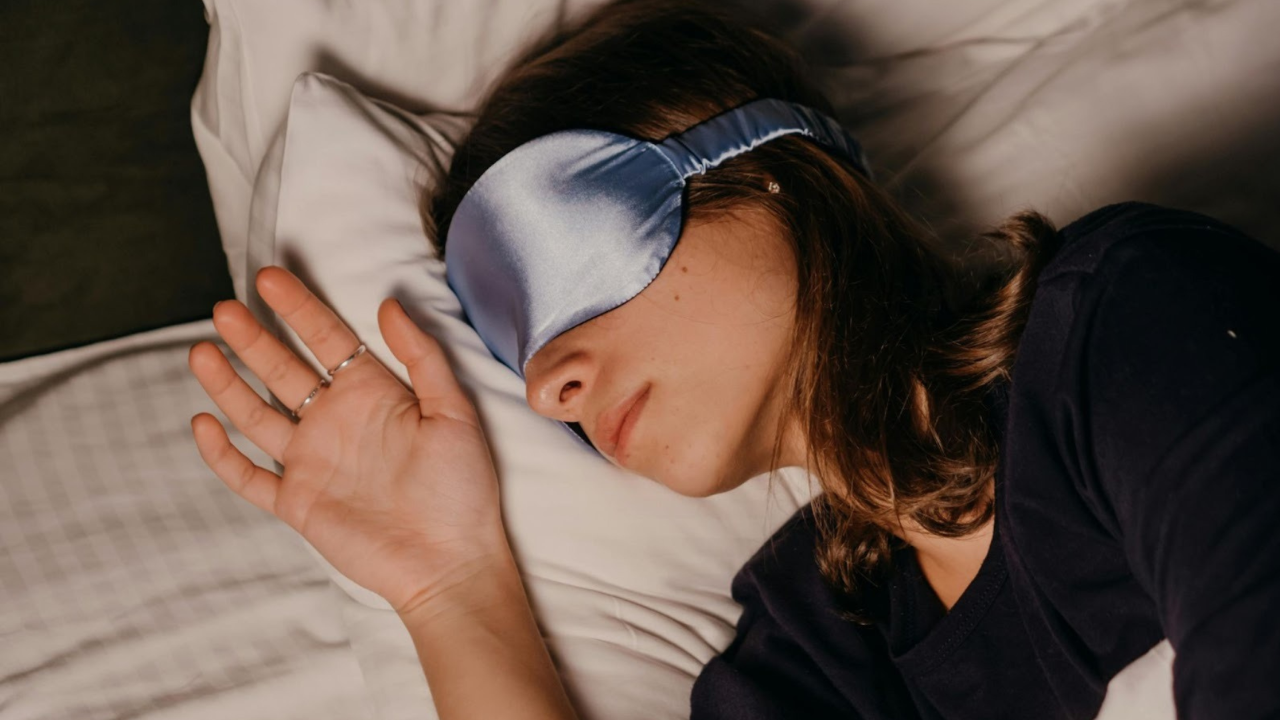
If you are in your forties or fifties and your sleep suddenly feels different, I want you to know you are not imagining it. So many women in perimenopause notice that their sleep becomes lighter, more broken and less refreshing.
Maybe you wake up drenched in sweat. Maybe your mind snaps awake at three in the morning and refuses to settle. Maybe your sleep feels fragile. Or maybe you feel heavy and tired all day even when you slept through the night. These are all common signs of perimenopause sleep problems.
Research shows that sleep disturbances become much more common during the menopausal transition. Some studies suggest that women in perimenopause are about 1.3 to 1.6 times more likely to have sleep disorders than women who are not yet in this phase [1]. Around 40% to 60% of women going through menopause report ongoing sleep problems [2].
If this sounds familiar, I want to walk you through why this is happening. I want to help you understand your body. I want you to feel supported, not confused or alone.
The Hormonal Chain Reaction That Disrupts Your Sleep
Perimenopause is powered by hormonal change. Estrogen and progesterone no longer rise and fall in the smooth pattern you may have had in your twenties and early thirties. ¨Progesterone starts to drop as your ovaries age and estrogen responds with big ups and downs till periods stop and all hormones are pretty much in the gutter. That hormonal shift touches many systems that control sleep.
Specialists at Cleveland Clinic explain that during perimenopause, fluctuating estrogen and progesterone can lead to hot flashes, mood changes and trouble sleeping [3]. A large review in 2025 also found that sleep disturbances often appear or worsen during perimenopause because of these hormone changes [4].
Here is what that means in simple terms:
- Estrogen helps support serotonin, a brain chemical that affects mood and sleep quality. When estrogen swings up and down, your sleep can feel lighter or more fragile.
- Progesterone has a naturally calming effect because of its link to a relaxing neurotransmitter called GABA. When it drops, it becomes harder to relax at night. Many women feel more wired, even when they are exhausted.
- These shifts also affect your internal “thermostat” in the brain. That is why night sweats and sleep problems often show up together.
This mix is the perfect setup for hormonal sleep issues. You are not weak or doing anything wrong. Your brain and body are simply reacting to a changing hormone environment.
When Heat Wakes You Up Again and Again
Hot flashes and night sweats are called “vasomotor symptoms.” That is a technical way of saying your blood vessels and temperature control are more reactive than before.
A large study published in The Lancet Diabetes & Endocrinology found that about 68% of women in late perimenopause reported vasomotor symptoms (hot flashes and night sweats), of which 37% had moderately-to-severely bothersome symptoms. [5].
When you combine night sweats and sleep, this is what often happens:
- Your body suddenly overheats.
- You wake up hot, flushed or drenched.
- Your heart may pound.
- Cortisol, your stress hormone, rises.
- It becomes hard to fall back to sleep.
Over time, this pattern can turn into menopause insomnia. You might start to dread bedtime because you expect to wake up. Or you may feel tired all day because your deep sleep is constantly interrupted.
The important thing to remember is this. The problem is not that you are “bad at sleeping.” Your body is reacting to very real temperature and hormone shifts.
The “Wired but Tired” Effect
One of the most frustrating hormonal sleep issues is feeling completely exhausted but still unable to fall asleep. Or you fall asleep, then wake up and feel wide awake in the middle of the night.
During perimenopause, your stress system can become more sensitive. Estrogen and progesterone interact with cortisol and adrenaline, the hormones that manage your stress response. When reproductive hormones fluctuate, your stress hormones often do too.
Changes in “circadian rhythm,” which is your internal body clock. As hormones change, melatonin production can drop, and your sleep-wake cycle may shift.
This can look like:
- You feel sleepy after dinner.
- By the time you get into bed, your brain has “woken up” again.
- You wake at 3 or 4 a.m. with your mind racing.
- You experience profound fatigue during the day, but do not sleep well at night.
This “wired but tired” state is a big part of perimenopause sleep problems. It can also feed into anxiety about sleep, which makes it even harder to switch off.
Hidden Triggers That Make Perimenopause Sleep Problems Worse
Hormones are a major driver. But certain habits and lifestyle factors can quietly intensify perimenopause sleep problems and menopause insomnia.
Common triggers include:
- Alcohol in the evening. It might help you fall asleep, but research shows it fragments sleep and can worsen night sweats [6].
- Caffeine later in the day. As hormones change, many women become more sensitive to coffee, tea, and energy drinks.
- Screen time at night. Blue light from phones and laptops can suppress melatonin, the hormone that helps you feel sleepy.
- Very warm bedrooms. Studies suggest that a cooler room helps the body produce more melatonin and can ease menopausal-related night sweats and sleep issues [7].
- Irregular bed and wake times. The body’s internal clock loves routine. Changing it often can make hormonal sleep issues worse.
You do not have to be perfect in all of these areas. But noticing small patterns can give you clues about what makes your own perimenopause sleep problems better or worse.
You Are Not Bad at Sleeping. Your Body Is Asking for Support.
If you have been blaming yourself for your sleep problems, I want you to stop for a moment and breathe. There is nothing wrong with you. Your body is going through a transition. Your hormones are shifting. Your sleep is responding to those shifts.
Everything you are feeling has a reason. Everything you are experiencing is valid.
At The Perimenopause Lab, my mission is to help women feel seen, understood, and supported during this time. You deserve clear information that feels human and grounded. You deserve tools that actually help.
Your sleep problems are not a failure. They are a message from your body. With the proper support, that message can guide you toward more calm and more clarity. Over time, you can find your way back to deeper and more restful sleep.
Questions that have come up this week:
1. What lifestyle modifications can improve sleep?
- Follow a regular sleep schedule.
- Avoid napping in the late afternoon or evening if you can. Go for a walk instead to break through that fatigue.
- Develop a bedtime routine.
- Try not to watch television or use your computer or mobile device in the bedroom. The light from these devices may make it difficult for you to fall asleep.
- Keep your bedroom at a comfortable temperature, not too hot or too cold, and as quiet as possible.
- Exercise at regular times each day, but not close to bedtime.
- Avoid eating large meals close to bedtime.
- Stay away from caffeine (found in many coffees, teas, and chocolate) late in the day.
- Remember, alcohol won’t help you sleep. Even small amounts make it harder to stay asleep.
2. How many hours of sleep does a perimenopausal woman need?
The recommended amount of sleep for a woman in perimenopause is 7 to 9 hours per night, consistent with general adult guidelines. However, perimenopausal women are at increased risk for sleep disturbances and may have difficulty achieving this duration due to hormonal changes, vasomotor symptoms, and other factors. So the real answer is just do your best and don’t stress about the numbers but focus more on how refreshed you’re feeling when you wake up and how energetic or productive you are during the day. Your body will tell you what you need. So if you’re not feeling great even if your tracker said you got 7-9 hours, then speak up. You may need more than just good sleep hygiene.
2. Why do I wake up at 3 am in perimenopause?
The 3–4 a.m. wake-up is not random. It is a well-documented physiologic pattern driven by circadian cortisol dynamics, nocturnal glucose regulation, and perimenopausal hormone instability, all of which converge at that exact time window. Around 3 a.m., cortisol naturally begins its early-morning rise, and fluctuating estrogen and progesterone reduce the brain’s ability to buffer that surge. At the same time, blood glucose reaches its nightly low, triggering a small adrenaline-driven counter-response that becomes far more sleep-disruptive when hormone stability is lost. Prolactin also peaks during these hours, influencing thermoregulation and REM transitions; in perimenopause, these cycles become more fragile, making temperature shifts or autonomic arousal more likely to wake you.
This is also when REM sleep is at its lightest, so it’s highly sensitive to cortisol, temperature changes, and sympathetic activation. That means so even subtle internal shifts can trigger full awakening. Liver metabolism ramps up its early-morning glucose production during this time as well. Although TCM and Ayurveda describe this as a “liver wake-up,” the modern correlate is measurable: nocturnal glucose dips, cortisol correction, and unstable autonomic tone. When combined with perimenopausal fluctuations in estradiol and progesterone, these normal physiologic transitions become much more noticeable, creating the classic and consistent 3–4 a.m. wake-up experienced by so many women in midlife.
Sources:
- Zeng, Weisi, Jialan Xu, Ying Yang, Meiling Lv, and Xin Chu. "Factors influencing sleep disorders in perimenopausal women: a systematic review and meta-analysis." Frontiers in Neurology 16 (2025): 1460613. https://doi.org/10.3389/fneur.2025.1460613
- Baker, Fiona C., Adrian R. Willoughby, Stephanie A. Sassoon, Ian M. Colrain, and Massimiliano de Zambotti. "Insomnia in women approaching menopause: beyond perception." Psychoneuroendocrinology 60 (2015): 96-104. doi: 10.1016/j.psyneuen.2015.06.005
- Cleveland Clinic. “Does Menopause Cause Insomnia and Sleeplessness?” Cleveland Clinic, February 20, 2024. https://health.clevelandclinic.org/menopause-insomnia
- Troìa, Libera, Martina Garassino, Agnese Immacolata Volpicelli, Arianna Fornara, Alessandro Libretti, Daniela Surico, and Valentino Remorgida. "Sleep Disturbance and Perimenopause: A Narrative Review." Journal of Clinical Medicine 14, no. 5 (2025): 1479. https://doi.org/10.3390/jcm14051479
- May, Natasha. “‘Ignoring Hot Flushes Is Wrong’: Study Challenges Assumptions about Perimenopause Symptoms.” The Guardian, July 25, 2025. https://www.theguardian.com/society/2025/jul/26/ignoring-hot-flushes-is-wrong-study-challenges-assumptions-about-perimenopause-symptoms
- McCullar, Katie S., David H. Barker, John E. McGeary, Jared M. Saletin, Caroline Gredvig-Ardito, Robert M. Swift, and Mary A. Carskadon. "Altered sleep architecture following consecutive nights of presleep alcohol." Sleep 47, no. 4 (2024): zsae003. DOI: 10.1093/sleep/zsae003
- Xu, Xiaoying, Xiaoyan Liu, Shuran Ma, Ya Xu, Ying Xu, Xiazhen Guo, and Dekui Li. "Association of melatonin production with seasonal changes, low temperature, and immuno-responses in hamsters." Molecules 23, no. 3 (2018): 703. https://doi.org/10.3390/molecules23030703